When the Future calls
A Short Story by Vasu Gangapalli
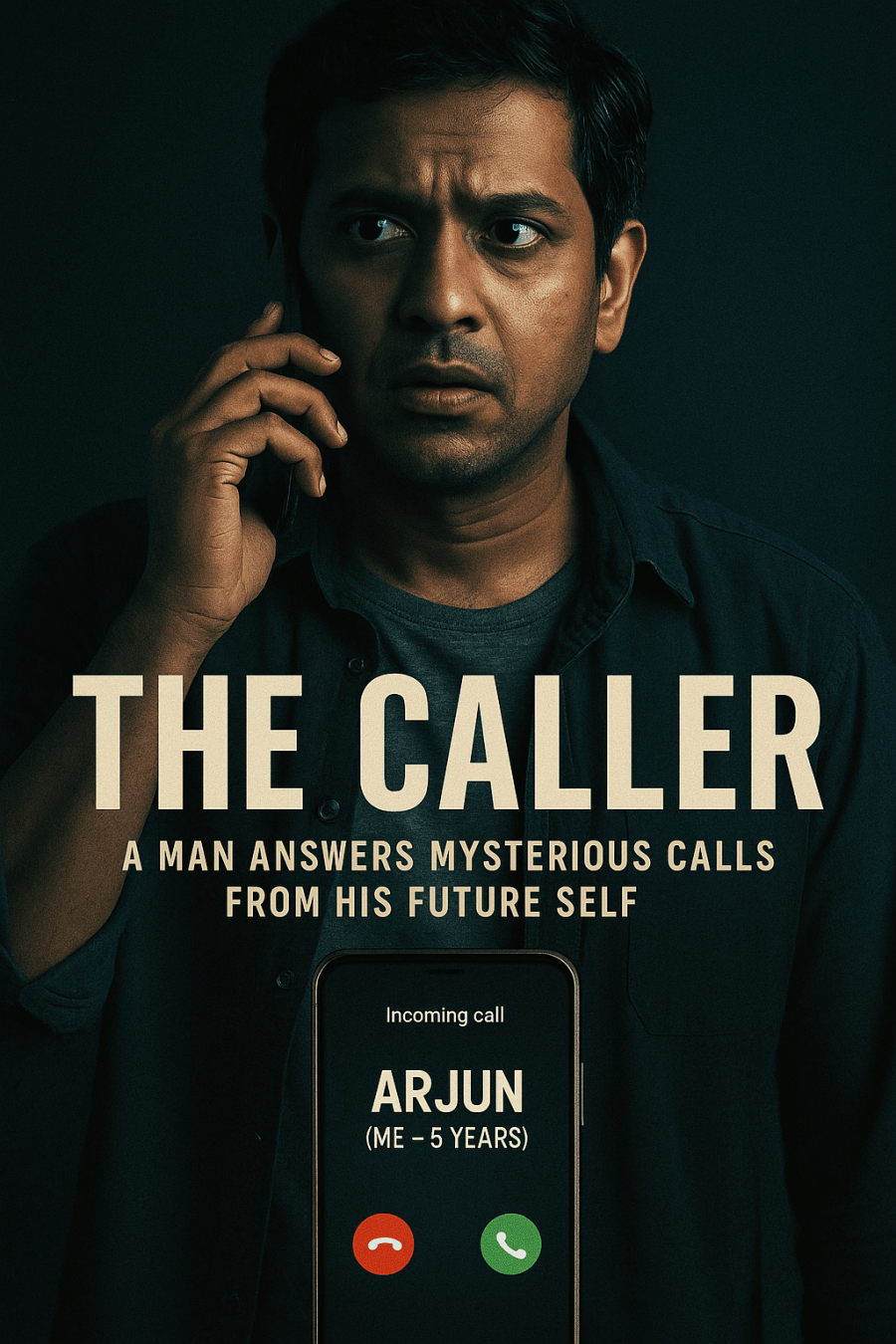
The first time Arjun’s phone rang with his own number flashing on the screen, it was just past midnight.
He stared at it, unsettled. Maybe a glitch? Spam? Still, something urged him to swipe.
“Hello?” he said cautiously.
There was a pause, then his own voice came through, low and urgent. “Arjun, don’t take the right turn in five minutes. Trust me.”
The call cut off.
Arjun sat frozen in bed, staring at the silent phone. By morning, he half-convinced himself it had been a dream. But on the way to work, he reached the familiar intersection. Instinct tugged him toward the right turn. Instead, he hesitated. A truck roared past, smashing into a car that had just taken the lane.
His hands shook on the steering wheel. “It’s real,” he whispered.
—
The calls didn’t stop.
A week later, as he reached for his wallet to go to the ATM, the phone buzzed. His number again.
“Don’t go now,” the voice said. “Wait fifteen minutes.”
He obeyed. Later, news spread of a violent robbery at that very ATM.
Another day, just as he boarded the metro, his phone lit up. “Don’t sit in the last compartment.” He changed seats. Minutes later, the last coach derailed.
Fear became routine. Yet gradually, Arjun stopped doubting. The voice — his voice — was saving him.
—
Then the calls turned personal.
“Don’t meet Riya at the café tomorrow,” the voice warned one night.
Arjun frowned. “Why? She’s my closest friend. I can’t just cancel.”
“She’ll confess she loves you,” the voice said. “You’ll panic and reject her. You’ll lose her forever. Wait three days.”
He obeyed reluctantly. Three days later, Riya confessed again, but this time he was ready. He pulled her into his arms under the rain.
The realization hit him hard: the voice wasn’t only protecting his life. It was shaping it.
—
Arjun’s unease grew. One night he shouted into the phone, “Who are you?!”
A pause. Then the answer: “I’m you. Five years older. A crack opened in time. I can’t stop it. I can only warn you.”
“Then meet me!” Arjun demanded.
“Not yet,” the voice said softly. “When the time is right.”
The meeting came sooner than expected.
At the old clock tower, Arjun saw him — older, gaunt, regret etched deep.
“It’s true,” Arjun breathed. “You’re me.”
The man nodded. “I failed. I lost everything. But you—” He placed a trembling hand on Arjun’s shoulder. “You still have a chance.”
Arjun’s eyes caught the silver ring on his finger, engraved with Riya’s initials. “You married her.”
The older man smiled bitterly. “And lost her. That’s why I guided you differently.”
The clock struck midnight. His form shimmered, breaking apart. “No more calls. The future is yours.” Then he vanished.
—
The silence lasted weeks. Then the phone rang again.
“Ten years ahead,” the voice introduced itself. Calm, steady. “I’m not here to frighten you. I’m here to prepare you.”
“For what?” Arjun asked.
“In five years, a fire will break out at the central metro station. Hundreds will die. You’ll be there. You’ll have seconds to act. That’s why I’ve been calling.”
The calls became instructions. Run every morning. Learn first aid. Tell Riya to trust him, no matter what.
When the fire came, the chaos was indescribable. Smoke filled the station, people screamed, the ceiling cracked. Arjun remembered the voice: lead them to the west exit. He did. Minutes later, the east tunnel collapsed. Dozens lived because of him.
That night, the ten-year voice called once more. “You’ve already done what I couldn’t. But not all futures want you to succeed.” Then silence.
—
The next call chilled him.
“I’m twenty years ahead,” the voice said, older and strained. “The calls aren’t random. They’re allowed. Governments discovered this fracture and built Project Mirrorline. You’re their subject. They don’t want you. They want Riya.”
“What do you mean?” Arjun demanded.
“In every timeline, Riya dies. Except this one. That anomaly terrifies them. They’ll come for her.”
Days later, two men in blue uniforms knocked at his door. “Telecom maintenance,” they claimed. Arjun slammed it shut. His chest heaved. The warning had been true.
The twenty-year voice returned. “Destroy the phone. It’s the only way to end this.”
—
He raised it, ready to smash it — when another call came. Unknown number.
“Papa,” a small voice said. “Don’t destroy the phone. Please.”
Arjun froze. “Who are you?”
“Your daughter,” the child replied. “You and Mama — Riya. My name is Anaya.”
Riya gasped. The child whispered something only she could know: her unfinished poem about a red kite.
It was real.
But another call cut in. The twenty-five-year voice, bitter and hard: “She isn’t real. They planted that memory. Destroy the phone now.”
Then another voice followed, gentler, fifteen years older: “She is real. I held her in my arms. Don’t listen to him. Keep the phone. Keep her alive.”
The device buzzed violently, multiple futures shouting at once, all contradicting each other. Arjun’s head spun.
Riya gripped his face, eyes glistening. “Choose me, Arjun. Not them. Me.”
With a cry, he smashed the phone against the floor. Glass shattered. Silence fell.
Then, faintly, from the broken speaker came a whisper: “Papa… why?”
Arjun dropped to his knees, sobbing. Riya wrapped her arms around him. “If she’s real,” she whispered, “we’ll make her real. Together.”
—
The calls never returned.
Time moved quietly, the way it once had. Life filled with small arguments, laughter, bills, long walks, plans. Ordinary days became precious.
Years later, in a bright hospital room, Riya placed a newborn baby in Arjun’s arms. The child blinked up at him, tiny fingers wrapping his thumb.
Riya smiled through tears. “Her name?”
Arjun swallowed, his heart breaking open. “Anaya.”
The name carried across timelines, across every fractured self, across every test of fate.
This time, it was real.
Paper boats
Boats are safe on shore but they weren't built for that – I set my sail in the ocean of words
 Paper boats