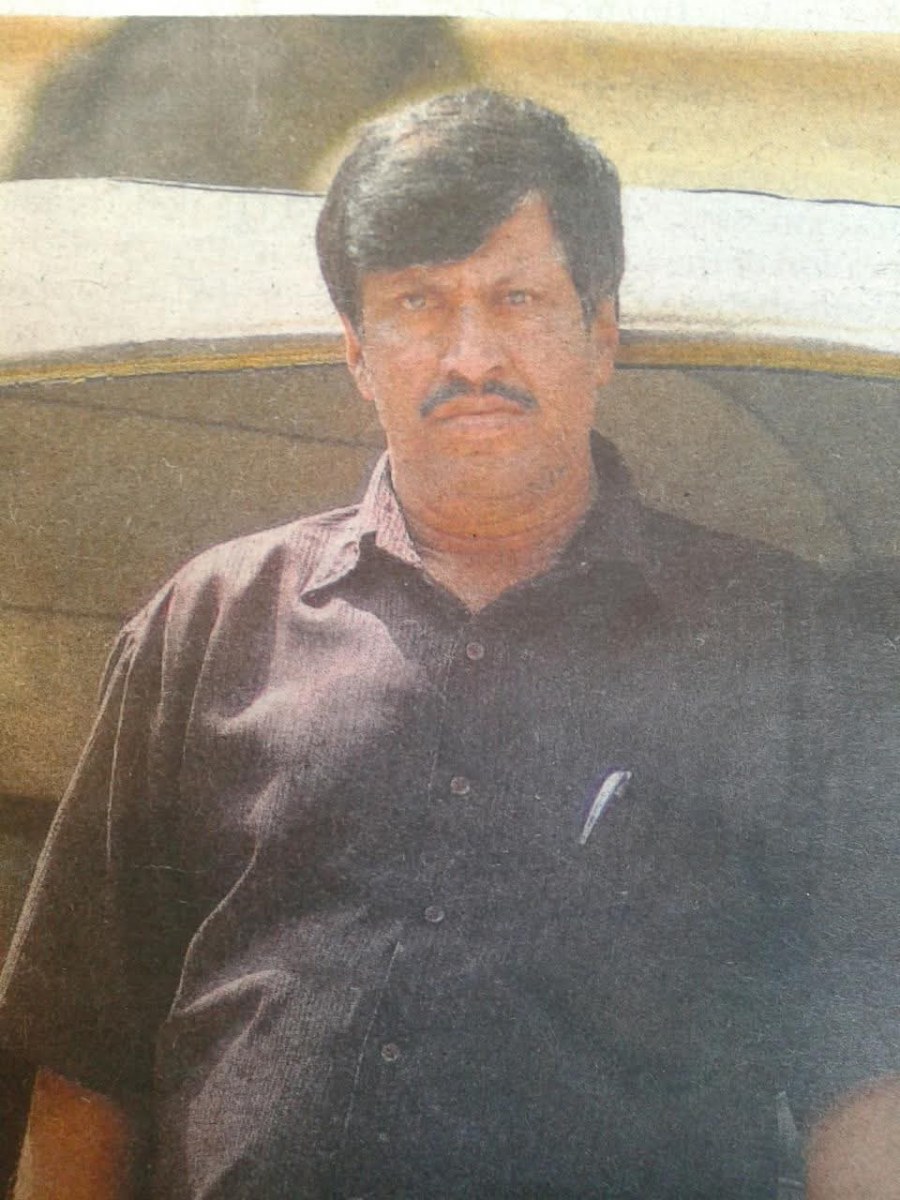
One Good Deed, Please!
A Short Story by Vasu Gangapalli
Based on a true incident
One Monday evening, Keerthana returned home from school with her weekly assignment.
The task was simple: one of her parents had to perform a “good deed” within six days. Each child had to write down the deed in a notebook and read it aloud in class the following Monday.
When her father, Narayana M., came home, she handed him the notebook.
He read the assignment slowly and looked at her.
“Tell me, dear… what good deed can I possibly do?”
“Dad,” eight-year-old Keerthana said with a bright smile, “you have six whole days. Your chance will come — just be ready!”
Narayana, a college dropout and an auto driver for fifteen years, smiled weakly. He remembered how he once returned a smartphone a passenger had forgotten. Many wouldn’t have. But that was long ago. This assignment needed something now — something his daughter could proudly share.
“You don’t need to be someone special to do one good deed, Dad,” Keerthana added, almost reading his thoughts.
“I know, my child,” he said.
—
Waiting for the Opportunity
The next morning, Narayana told his fellow auto drivers about the assignment.
They burst into laughter.
“Has the teacher gone crazy?” one man scoffed.
“No,” Narayana replied calmly. “Doing small good things matters. What we give always comes back in some way. I believe that.”
Another driver snorted, “Utter nonsense.”
Narayana only smiled and let it go.
For three days, Keerthana waited eagerly every evening.
“Any good deed today, Dad?”
“Not yet, dear… no opportunity.”
Each time, her face fell a little, and Narayana’s heart sank. He silently prayed for a chance to make her proud.
—
Friday Morning
On Friday, while waiting for a customer at LIC Colony, Jayanagar, an elderly man—around eighty—approached his auto.
His name, he said, was Venkat Rao.
A few minutes into the ride, Narayana realized something was wrong. The man kept repeating his own name and couldn’t recall his address. He had no identity card, no money, nothing.
Narayana could have asked him to get down. He could have turned the meter off and moved on. But he didn’t.
For hours, he drove around Jayanagar, hoping a familiar street would spark the old man’s memory. He skipped potential passengers. He ignored the running meter. He simply kept searching.
When hope began to fade, he took the man to the Tilaknagar police station.
“No use bringing him here,” they said. “Happens often. Take him to NIMHANS.”
At the Jayanagar police station, the response was no better.
Tired and helpless, Narayana returned to LIC Colony — the place where he had picked Rao up — and found his friend Raghunandan.
But even he couldn’t identify the man.
It was getting dark. For a moment, Narayana considered leaving the elderly man at a temple for the night.
And then, he remembered his daughter’s voice:
“You don’t have to be someone special to do one good deed, Dad.”
Narayana smiled.
He took the old man home.
—
The Good Deed
“Who is he, Dad?” Keerthana asked when he entered.
“He’s the opportunity I was waiting for,” Narayana said gently.
He explained everything to his wife and daughter.
They fed the old man warm ganji. He ate slowly and then slept peacefully.
But Narayana didn’t sleep.
What would he do the next day?
—
The Breakthrough
Early next morning, Raghunandan came running with a newspaper — Vijaya Karnataka.
The missing-person advertisement matched the man sleeping in Narayana’s house.
They called the number immediately.
Soon, Rao’s son-in-law, Raghavendra Vellore, arrived in a hurry. He explained that his father-in-law, a retired gazetted officer, had been suffering from Alzheimer’s for three years.
“This is the first time he didn’t come back from his morning walk. He was missing for four days,” Raghavendra said, voice trembling. “We even went to the police, but they were of no help. Only the newspaper gave us hope.”
He turned to Narayana.
“I don’t have enough words. Please… take this money.”
“No, sir,” Narayana said firmly. “I didn’t do this for money. I just wanted to reunite him with his family. This is my good deed — for my daughter.”
“For your daughter?” Raghavendra asked, confused.
Keerthana stepped forward and narrated the entire assignment.
Raghavendra smiled emotionally. “I can never repay this kindness.”
“You can,” Keerthana said softly. “When you get a chance… do one good deed for someone who needs it.”
“I’ll wait for my opportunity,” he promised.
—
The Hero at School
Next Monday, Keerthana stood before her class and narrated the entire incident.
The room fell silent.
She ended with, “I’m very proud of my father. He gave everything he could to help that grandpa. Many others might have abandoned him.”
The class burst into applause.
Her teacher, Ms. Vimala, walked up to her with an autograph book.
“Keerthana, I want your father’s autograph. He is a hero worth following.”
Keerthana beamed. “Yes, Ma’am.”
The End
—
Author’s Note
Alzheimer’s disease has long interested me, and I always wanted to write a story around it. I finally found the right spark in a true incident published as the cover story in Bangalore Mirror, 25 November 2012 — an issue I bought by pure chance. Perhaps fate wanted this story to be told.
Auto drivers in Bangalore are often judged harshly — I’ve done the same.
But Narayana proved that goodness still thrives in unexpected places.
—
A Quick Guide to Alzheimer’s
Alzheimer’s is the most common form of dementia, usually affecting people above 65.
The most overwhelming symptom is memory loss.
Radha Murthy, founder of Nightingales Trust, advises:
Families should remain patient and understanding.
Patients must always carry identification with an address.
Police need greater sensitivity — many such cases go unreported or unresolved.
To report missing elderly persons, call the Elders Helpline: 1090 or 080-1090 (toll-free).
Paper boats
Boats are safe on shore but they weren't built for that – I set my sail in the ocean of words