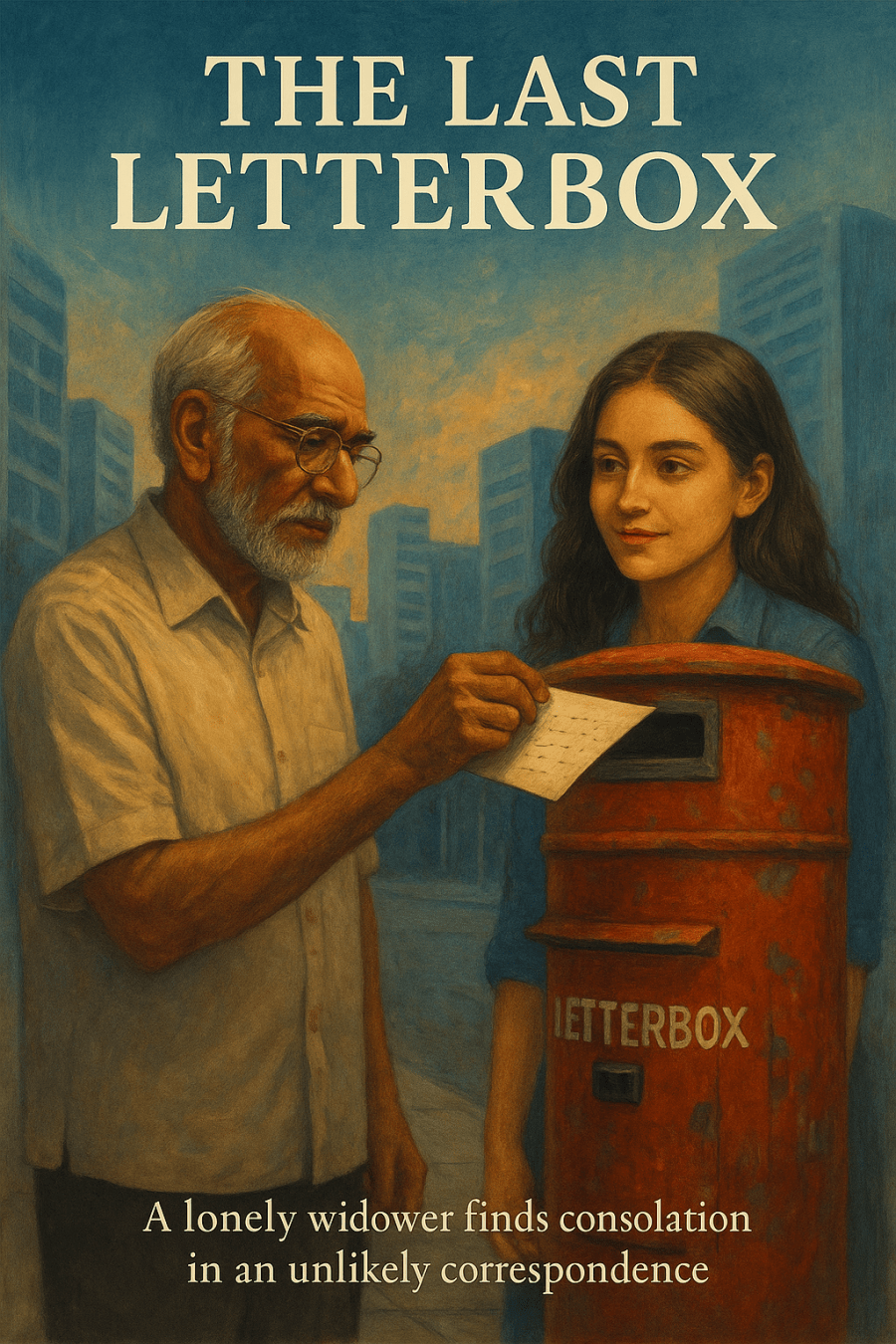
The Last Letterbox
A Short Story by Vasu Gangapalli
In the heart of the bustling city of Hyderabad, surrounded by glass towers and glowing billboards, there stood something that didn’t belong. Rusted, faded red, its paint peeling in uneven patches—an old letterbox.
No one remembered when it was last used. Most people walked past it without a glance. Some children even mistook it for a relic, a decorative antique left behind.
But for Ramanathan, a retired schoolteacher in his late sixties, the letterbox was a portal to something the modern world had forgotten—the beauty of words written by hand.
Every evening, after his solitary walk, Ramanathan would stop by the letterbox. He had lost his wife, Meera, three years ago. His son lived in New York, too busy with his job to call often. The silence in his flat weighed on him, pressing against his heart.
One evening, with trembling fingers, he slipped a handwritten letter into the slot.
“To whoever finds this,
I am Ramanathan. I live close by. This city has changed so much—everything is digital now. But I miss the days of letters, the waiting, the words that carried soul. If anyone still believes in them, reply.
– A Lonely Old Man”
He didn’t expect anything. It was simply a ritual to pour out the words he had no one to speak to.
But a week later, when he lifted the flap, a crisp white envelope waited inside.
His hands shook as he unfolded the note.
“Dear Lonely Old Man,
I thought no one else noticed this letterbox. My grandmother used to write letters every week until she passed. Your words reminded me of her. If you wish, I will reply.
– A Stranger”
Ramanathan smiled for the first time in weeks.
That night, he wrote back.
The exchanges became frequent. They didn’t share names, only thoughts.
Ramanathan wrote about his memories with Meera—the way she’d hum while watering plants, the smell of filter coffee she made every morning.
The stranger replied with dreams, fears, and reflections:
“Sometimes I feel invisible in this city, like I don’t belong. Your letters make me feel seen.”
Their letters were filled with life, laughter, even silly jokes. The letterbox was no longer just iron and rust; it was alive, breathing with their words.
One rainy evening, Ramanathan slipped a note into the slot.
“Stranger, after so many letters, may I know who you are? Just your name. That is enough.”
The next day, the reply came.
“No, not yet. If we reveal ourselves too soon, the magic may break. For now, let us remain voices on paper. – Your Stranger”
Ramanathan was disappointed, but he respected the wish.
Weeks passed. Then suddenly—the letters stopped.
Every evening, he opened the flap, only to find emptiness. Days turned into weeks. A hollow ache filled him again.
One night, sitting alone at his desk, he whispered,
“Did I lose you too, Stranger?”
Just when hope had dimmed, there was a knock on his apartment door.
When he opened it, a young woman in her twenties stood there, clutching a bunch of envelopes. Her eyes brimmed with tears.
“Are you… Ramanathan?”
He nodded, stunned.
She handed him the letters.
“I’m Ananya. I was the one writing to you. I should’ve told you sooner, but I was scared you’d stop if you knew I was so young. My grandmother used to tell me about people like you—people who loved letters. When I saw yours, I couldn’t resist replying. But…” She choked on her words. “I stopped because my mother fell seriously ill. I couldn’t write. I’m sorry.”
Ramanathan’s eyes softened. He placed a trembling hand on her shoulder.
“My child, you don’t need to apologize. You’ve given me something I thought I lost forever—companionship.”
That evening, over steaming cups of chai, Ananya shared her world, and Ramanathan shared his.
Letters gave way to conversations, and the last letterbox in the city had done something extraordinary—it had connected two lonely souls across generations.
From then on, they decided to keep writing, even while meeting in person. The ritual mattered. The letterbox became their sacred place.
One morning, city workers arrived to remove the old letterbox, calling it “useless.”
But when they opened it, they found it overflowing with letters—hundreds, not just from Ramanathan and Ananya, but from neighbors, strangers, students, and shopkeepers who had seen them posting letters and had joined in silently.
The letterbox was no longer useless. It had become a heart in the middle of a digital city—a reminder that words written by hand still carried magic.
✨ Sometimes, in a city that forgets the past, all it takes is one old letterbox to make people remember what it means to be human.

